Are you finding mealtimes more challenging than rewarding? Do you wonder if you're doing enough to encourage your baby's language development?
You're not alone! Many parents don't realise that the dinner table is actually one of the most powerful places for developing your child's speech and language skills. Every chew, every messy hand gesture, and every sound they make is a crucial step toward communication.
That's why I was thrilled to host Sarah Kelly, Specialist Speech and Language Therapist (SLT), on the Mummy Cooks Instagram Live. Sarah shared fantastic, easy-to-implement techniques for turning everyday feeding sessions into language-rich learning environments, from simple games to key signs that might require professional advice.
Check out our Live here
1. The Power of Play and Noise at the Table
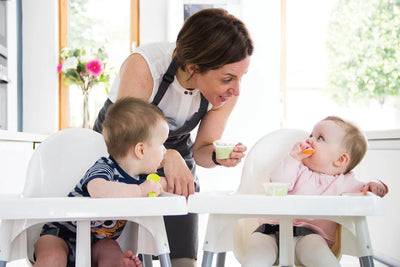
Mealtimes should be fun and interactive, not just quiet feeding sessions. As Sarah explained, connecting sound with positive experiences reinforces communication.
-
Repeat Sounds & Model Language: When your baby makes a sound (like "ba-ba-ba"), repeat it back to them with enthusiasm. If they point to their cup, say the word: "CUP!" This models language and shows them their communication attempts are being acknowledged.
-
Sing a Happy Song: Use short, predictable songs during repetitive actions (e.g., "Ready for your spoon? Doo-doo-doo!"). Predictable routines and sounds help build auditory memory and anticipation.
-
Simple Words are Best: Focus on "power words" that are highly relevant to the moment: "More," "Up," "Down," "Eat," "All done." Repeating these simple, functional words over and over is how babies build their first vocabulary.

2. Food, Fussy Eating, and Communication
Fussy eating is often related to sensory processing and oral motor skills—and both can be gently addressed through play and communication.
-
Keep it Low-Pressure: If your child is resistant to a new food or texture, talk about the food's texture without demanding they eat it. Describe it: "This carrot is so CRUNCHY!" or "This soup is WARM and SQUISHY." This helps them process sensory information.
-
Use Descriptive Language: Instead of asking, "Do you like it?" ask questions that encourage conversation about the food's properties: "Is it HOT or COLD?" "Is it BIG or SMALL?" This builds descriptive language skills.
-
No Food Fights: Remove the power struggle. We discussed how focusing on play and talking (instead of forcing them to eat) makes mealtimes a positive communication experience, which ultimately reduces anxiety around food.
For help on fussy eating check out my webinar and ebook
3. When to Check In: Signs at 1 Year Old
Early intervention is key for developmental progress. Sarah provided valuable insight into when parents should consider consulting a Speech and Language Therapist (SLT):
-
Difficulty with Textures: If your baby is frequently gagging, coughing, or choking during feeding, or is avoiding specific food textures (like refusing lumpy foods or solids after nine months), it warrants a check-in. This can signal oral motor difficulties that an SLT specialising in feeding can assess.
-
Limited Speech Milestones: While every child develops at their own pace, an SLT can evaluate if your baby is meeting expected communication milestones. If your child is around 1 year and you have other developmental concerns, consulting a specialist can provide peace of mind and an action plan.
-
General Feeding Difficulties: If the child is refusing entire food groups or having difficulty with chewing/swallowing that affects their growth, a consultation is essential.
If you are seeing any of these signs, trust your instincts and reach out to a professional SLT. Early support is the best gift you can give your child!
Sarah is founder of PlayEasy.ie Toys designed to support your baby's motor skills, attention, interaction, play and communication.
Our Weaning Advice page provides information and advice on weaning your baby. It includes recipes, tips, and articles on a variety of topics related to weaning, such as introducing finger food, adding herbs and spices to baby food, and healthy snacks for your baby, and lots more